I swear I’m stuck in Groundhog Day.
For the past 1.5 years, protein has absolutely dominated the health conversation. It’s on every podcast. It’s central to perimenopause discussions. The new dietary guidelines even declared “the war on protein is over” (spoiler alert: there never was a war to begin with).
Everyone’s talking about protein for changing body composition, building muscle, and losing weight. And as a registered dietitian, I’m watching too many people get it spectacularly wrong—then wonder why they’re frustrated, uncomfortable, or not hitting their goals.
Let me help you cut through the noise.
Why Protein Is Having Its Moment (And Why It Actually Matters)
First, let’s understand what makes protein unique among macronutrients.
Here’s the thing: your body doesn’t actually need carbohydrates to function and keep you alive. Your body can readily convert fat to glucose and glucose back to fat. There are only a few essential fatty acids you have to eat.
But protein? That’s a completely different story.
Your body cannot readily convert protein into fat or glucose—or vice versa. The building blocks of protein (amino acids) are essential for repairing tissue, building muscle, supporting immune function, and countless other processes throughout your body. You can’t make them from carbs or fat.
This means the necessity to eat protein regularly is greater than other macronutrients.
So yes, protein matters. It’s earned its spotlight in the health conversation.
But Here’s What Nobody’s Telling You
Protein is still a macronutrient. A source of calories. It is NOT a free food.
You cannot just keep piling protein onto your plate and hope to lose weight or magically hit your goals. Every protein bar, shake, string cheese, Greek yogurt with added protein powder, and bag of protein chips you add? That’s adding calories to your day.
The Surprising Truth About Excess Protein
And here’s the kicker that might surprise you: when you eat more protein than your body needs for muscle repair and growth—in the context of a higher calorie diet—that excess protein gets converted to fat by your liver and can actually increase visceral fat.
That’s the dangerous fat that wraps around your organs and increases your risk for metabolic disease.
Protein is energy. Like all energy, too much of it will be stored as fat.
The Better Question to Ask
Instead of “Am I getting enough protein?” ask yourself:
“When I add protein, what am I taking away?”
Think of your daily food intake like a suitcase with limited space. If you’re shoving in protein bars “just because,” you’re either crowding out something else—or overstuffing the suitcase entirely.
I’m watching clients add protein shakes when they’re not even hungry, just to “get it in.” This isn’t helpful. If you’re not hungry, it’s okay to not eat.
The Problems I’m Seeing in My Practice
Here’s what’s happening with this protein obsession:
1. Uncomfortable Constipation
I’m seeing people come in with severe constipation from high-protein diets that lack fiber and other nutrients essential for gut health. An unbalanced high-protein approach can increase risks for colon and other cancers.
2. Protein Junk Food Everywhere
For every diet trend, there’s an industry ready to take your money. Protein junk foods are exploding:
- Protein Pop-Tarts (still Pop-Tarts with whey powder added)
- Protein pancakes (same old frozen processed pancakes with protein powder)
- Protein banana taffy (yes, really—a client brought this to an appointment)
If it looks too good to be true, it is. Save your money.
3. Missing the Bigger Picture
People are so focused on hitting protein numbers that they’re ignoring:
- Overall calorie intake (are you in a deficit if weight loss is your goal?)
- Fiber and gut health
- Vegetables and nutrients
- The quality of their food
What to Do Instead: The 2 P’s Strategy
The truth about protein? Yes, it’s uniquely essential. But it should still only make up about 30% or less of what you focus on. The rest? That’s where balance, nutrients, fiber, and color come in.
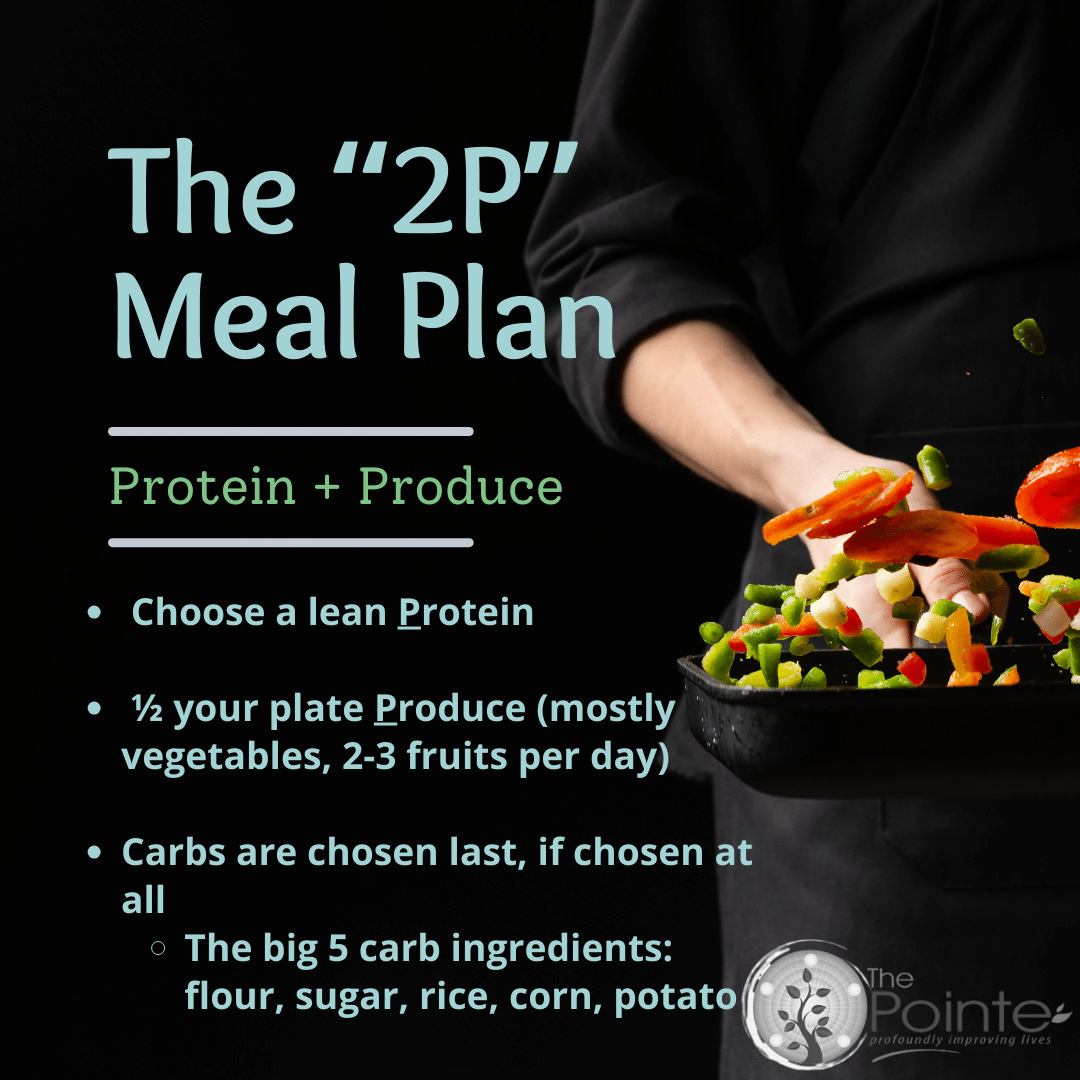
That’s why at The Pointe, we focus on the 2 P’s: Protein + Produce (fruits and vegetables).
Every meal and snack should have both. Traditional carbohydrates? They become an afterthought.
Here’s How to Be Strategic With Protein:
1. Swap, Don’t Stack
If you’re adding protein, what are you taking away? Use protein to crowd out some of the carbohydrates on your plate. Don’t just pile it on top.
2. Where’s Your Produce?
In our Health Without Overwhelm program, we show you how to make half your lunch and dinner plates vegetables. We help you choose balanced 2P snacks that serve as a bridge to curb hunger until the next meal—not just random protein bars eaten standing at the counter.
3. Consider Your Total Energy Intake
If weight loss is your goal, is your overall energy intake creating a calorie deficit? Remember: protein adds calories. And excess protein above what your muscles need—in the context of too many total calories—gets converted to visceral fat by your liver. If you’re not in a deficit, you won’t lose weight—no matter how much protein you’re eating.
4. Choose Whole Foods Over Protein Junk
Whole foods first. Always.
Why the Produce Piece Matters So Much
You need to feed the bacteria and community in your gut to prevent constipation, support digestion, and reduce risks like colon cancer.
A high-protein diet without fiber and nutrients isn’t a health strategy—it’s a recipe for discomfort and long-term problems.
The Bottom Line
Protein matters—and it matters uniquely because your body genuinely needs it regularly. But it’s only one piece of the puzzle.
Balance matters more.
You don’t need to become a protein-obsessed calculator. You need a strategic, balanced approach that honors protein’s role while also prioritizing gut health, nutrient density, and your overall goals.
Need Help Figuring This Out?
You’re not alone, and you’re not expected to figure this out by yourself. As dietitians, we calculate this stuff in our sleep. We help busy adults like you cut through the noise and create a realistic, sustainable plan that actually works—without the frustration, constipation, or confusion.
At The Pointe, we specialize in helping busy adults in the sandwich generation who feel burned out and overwhelmed. As both a dietitian and therapist, I guide clients through small, realistic steps to regain energy, confidence, and control over their well-being.
We’re based in Illinois and accept Blue Cross Blue Shield PPO and United Healthcare. Most of our clients pay as little as $0 out of pocket.
Ready to learn what’s right for you—not what some podcast guru says is right for everyone?
Schedule an appointment today and let’s create a plan that actually works for your life.