This post was made possible in partnership with Diagnostic Solutions Laboratory.
What an 8-Week Battle with Cyclospora Taught Me About Gut Health, Self-Advocacy, and the Power of Finding Answers
In the summer of 2024, I almost lost everything.
Not because of a catastrophic accident.
Not because of a life-threatening diagnosis.
Because of a microscopic parasite. Cyclospora.
For eight weeks, I battled a mysterious gastrointestinal illness that stole far more than my appetite. It stole my energy, my ability to think clearly, my motivation, and my connection with the people I loved most.
I would wake up each morning and force myself to see clients for a few hours before crawling back into bed. I spent weeks going in and out of sleep, watching television, and wondering how much longer I could keep functioning.
As a business owner, I felt everything slipping away.
One afternoon, my kids asked:
“Mom, come over to the pool with us.”
“I can’t. I don’t feel good.”
The disappointment on their faces broke my heart, yet again.
Life was passing me by.
My house wasn’t getting cleaned. I couldn’t cook meals. I missed family gatherings, summer activities, and moments I could never get back.
And in the back of my mind was the fear every entrepreneur understands:
What happens if I can’t keep going? I had worked so hard to build my practice.
Cyclospora Symptoms: Eight Weeks Without Answers
For eight long weeks, I searched for answers. Begging anybody to tell me what was wrong.
During that time, I had:
- Two primary care providers
- One Fourth of July urgent care visit
- One surgical consultation; I decided my gallbladder was the problem
- Two gastroenterology appointments
- Two blood draws
- A CT scan of my abdomen
- A gallbladder ultrasound
- Three stool tests
- Medications that didn’t made a dent in the symptoms. Ondansetron/Zofran, over the counter and prescription anti-diarrheals, 2 rounds of antibiotics where they guess what it might be.
And after all of that, I heard the words that so many patients with unexplained symptoms hear:
“Everything is normal.”
At my final GI appointment, I was told:
“You probably had food poisoning of some sort. Now it is infectious IBS. Give it six months.”
Six months. I would lose everything. I left that appointment in tears.
Six months felt like an eternity when I was barely functioning.
Every morning around 4:00 or 5:00 a.m., I woke up to the sound and feeling of water flushing into my colon followed by hours of intense urgency and diarrhea. By the end of the day, my abdomen was so bloated and distended that I was uncomfortable moving.
I was losing weight. Hair thinned and I was exhausted. Staying awake for more than few hours, felt like running a marathon.
The hardest part was watching life continue around me while feeling completely disconnected from it.
Cyclosporiasis and the Gut-Brain Connection: The Difference when you actually live it
Before this experience, I had spent more than 24 years helping clients navigate digestive concerns as both a registered dietitian and licensed professional counselor.
I understood the gut-brain connection.
I taught the gut-brain connection.
But experiencing it firsthand changed everything.
The diarrhea and abdominal pain were miserable, but they were not the symptoms that were the most debilitating:
It was the:
- Profound fatigue
- Brain fog, feeling as though my mind was no longer connected to my body
- Low-grade aches and discomfort
- Loss of motivation
- Apathy
- Difficulty focusing
- Feeling disconnected from life
Before this illness, I could explain how gastrointestinal inflammation and gut dysfunction could affect mood, cognition, and energy. During this illness, I lived it. It changed the way I listen to every client who tells me:
“I just don’t feel like myself anymore.”
Because now I understand, the ripple effect digestive illness can have on someone’s entire life.
How GI-MAP® Helped Identify Cyclospora (Finally Having an Answer)
I simply couldn’t wait six months hoping things improved.
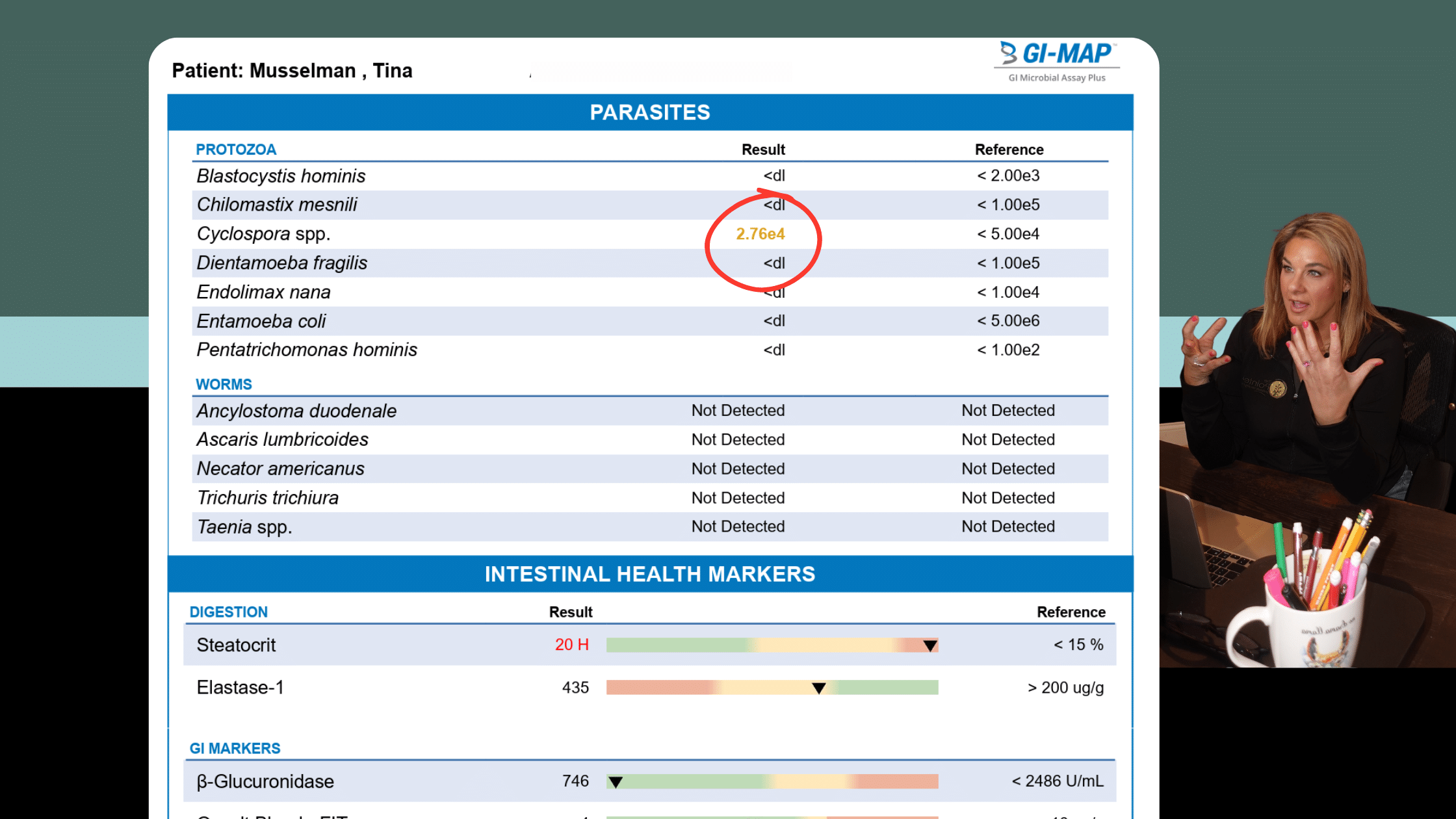
As both a clinician and a patient, I knew additional testing could provide more information. I ordered a GI-MAP® stool test through Diagnostic Solutions Laboratory to gather a more comprehensive picture of what might be contributing to my symptoms.
Two weeks later, I opened my results.
There it was. Cyclospora. A foodborne parasite.
I cannot fully describe the relief I felt seeing those words on paper. For eight weeks, I questioned myself.
Was I exaggerating?
Was I just struggling with IBS?
Was this something I simply had to tolerate?
Finally, I had confirmation that something real was happening inside my body. It wasn’t “all in my head.” There was a reason I couldn’t get out of bed. There was a reason I couldn’t think clearly. There was a reason my digestion was disrupted, my body was struggling, and my life had been put on hold.
For the first time in weeks, I felt:
Heard.
Seen.
Validated.
The report provided information about the infection, gastrointestinal inflammation, and digestive dysfunction that helped connect the dots between my symptoms and what my body was experiencing. And most importantly, I was able to go back to GI and ask for the right antibiotic.
I was prescribed Bactrim. By dose number three, I started feeling better.
After eight weeks of feeling trapped inside a body that didn’t feel like mine, that improvement felt miraculous.
By the end of treatment, I was about 75% back to myself.
All together, that summer I had taken seven different antibiotics before finally addressing the underlying infection. But the diagnosis gave me something I desperately needed:
A path forward.
The Lesson That Changed Me as a Practitioner
This experience transformed me as a clinician. For more than two decades, I have helped clients navigate digestive concerns. But spending eight weeks searching for answers gave me a perspective no textbook could provide.
When a client tells me they have been struggling with diarrhea, bloating, abdominal pain, fatigue, or brain fog for months or years,
I understand the emotional toll.
I understand the frustration of feeling dismissed.
I understand how exhausting it is to keep showing up while feeling like your body is working against you.
I also understand the importance testing yourself and self-advocacy.
Being your own advocate does not mean rejecting medical care or assuming you know more than your healthcare team. It means paying attention to your body, asking questions, not giving up hope that things can be better and becoming your own advocate.
Had I accepted “wait six months” as my only option, I may have continued watching my life pass by. Who knows where I or The Pointe would be today.
Test, Don’t Guess
One of the biggest lessons from my experience was the importance of asking better questions and using appropriate testing.
Traditional medical testing often begins with evaluating the most common or likely causes based on symptoms. That approach is appropriate in many situations.
However, persistent or unexplained symptoms may require a broader look.
In my case, comprehensive stool testing provided additional information that helped identify an infection that had not been detected through my earlier evaluation. For me, it was the difference between casting a wide net vs. throwing out a hook hoping to catch one fish. It’s looking at the forest instead of one tree.
The right information at the right time can change the direction of care.
At my follow-up appointment, my gastroenterologist said something I will never forget when I thanked him for helping “Thank yourself. I never would have ordered that test or guessed you had it.” Those words stayed with me.
Recovering After Cyclospora Infection I will never know exactly where I contracted Cyclospora. There was no known outbreak in the news at the time. If I had to guess, it may have been from contaminated fresh produce, herbs, or another food source.
Earlier that year, I had undergone a colonoscopy and shortly afterward developed pneumonia requiring antibiotics. While I cannot prove those events contributed, my hypothesis is that those experiences disrupted my gut microbiome and may have lowered my ability to fight it.
The aftermath of seven rounds of antibiotics meant I still had work to do. A year later, I repeated my GI-MAP to better understand how my gut ecosystem was recovering. Beneficial bacteria were still rebuilding, and digestion was continuing to improve.
Healing the gut is not always a quick process. Sometimes it is a journey.
Protecting Yourself During the Current Cyclospora Outbreak
Cyclospora is currently receiving attention due to recent outbreaks. Today, people have an advantage I did not have, healthcare providers are more likely to consider Cyclospora when there is an outbreak.
You do not need to eliminate fresh foods from your diet, but thoughtful food safety practices matter.
Consider:
- Washing your hands regularly
- Washing fresh produce thoroughly
- Cooking vegetables when appropriate
- Following public health updates and recalls
- Choosing frozen or canned options if specific produce is implicated
- Preparing more meals at home while the source is being investigated
One of the best long-term strategies is supporting a resilient gut microbiome through nourishing foods, adequate protein and fiber, movement, quality sleep, stress management, and thoughtful healthcare decisions.
Final Thoughts
My story is not just about Cyclospora. It is about what happens when someone knows something is wrong but cannot find the answer. It is about recognizing that gastrointestinal illness affects far more than digestion.
It affects your relationships.
Your work.
Your mental health.
Your ability to participate in life.
Today, I feel like myself again. But that summer changed me forever. It strengthened my empathy, deepened my commitment to patient advocacy, and reminded me that behind every symptom is a person whose life is being affected.
Sometimes clients need someone to say:
“I believe you. Let’s figure this out together.”
Concerned About Cyclospora?
If you’ve been experiencing persistent diarrhea, bloating, abdominal pain, fatigue, or other unexplained gastrointestinal symptoms, you don’t have to keep searching for answers alone.
As both a registered dietitian and someone who has personally experienced Cyclospora infection, I understand how frustrating it can be to feel unwell without a clear diagnosis.
If you’re wondering whether comprehensive stool testing may be appropriate for your situation, I’d be happy to help.
FAQs
Frequently Asked Questions
What is Cyclospora?
Cyclospora is a microscopic parasite (Cyclospora cayetanensis) that causes a gastrointestinal illness known as cyclosporiasis. Infection most commonly occurs after consuming food or water contaminated with the parasite.
What are the symptoms of Cyclospora infection?
Cyclospora commonly causes watery diarrhea, abdominal cramping, bloating, nausea, fatigue, loss of appetite, and weight loss. Some individuals also experience brain fog, low energy, and prolonged gastrointestinal symptoms that may persist for weeks if left untreated.
How do people get Cyclospora?
Cyclospora is typically acquired by consuming contaminated fresh produce, herbs, or water. Unlike many other gastrointestinal infections, Cyclospora is not usually spread directly from person to person.
How long does cyclosporiasis last?
Without appropriate treatment, Cyclospora infection can last for several weeks or even months. Symptoms may improve and then return, making diagnosis particularly challenging.
Why can Cyclospora be difficult to diagnose?
The symptoms of Cyclospora overlap with many other gastrointestinal conditions, including food poisoning, irritable bowel syndrome (IBS), and other infectious diarrheal illnesses. Because the infection may not be detected with every diagnostic approach, patients sometimes undergo multiple evaluations before receiving the correct diagnosis.
Can Cyclospora cause fatigue or brain fog?
Yes. While diarrhea is the hallmark symptom, many patients report profound fatigue, difficulty concentrating, brain fog, and reduced quality of life during infection. These symptoms may be related to the effects of prolonged gastrointestinal illness, inflammation, dehydration, and nutrient malabsorption.
How is Cyclospora diagnosed?
Cyclospora is diagnosed through stool testing.
Can GI-MAP detect Cyclospora?
Yes. GI-MAP® uses quantitative PCR to detect Cyclospora spp. Laboratory findings should always be interpreted in the context of the patient’s clinical presentation and used to support, rather than replace, clinical judgment.